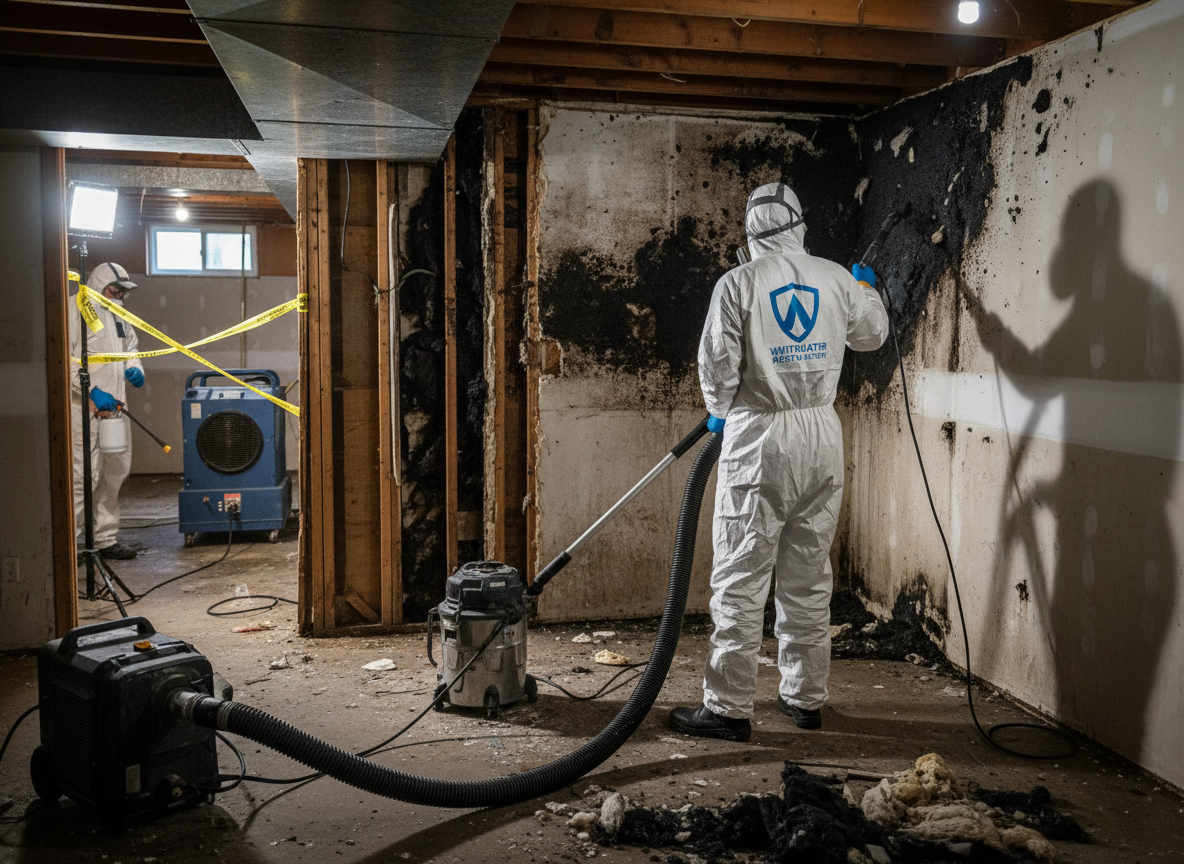
Water intrusion from roof leaks, plumbing failures, or monsoon runoff quickly turns into mold colonies in Whitewater homes because daytime temperatures above 110 degrees dry surfaces fast while trapping moisture inside walls and attics. Older single-story houses common along Dillon Road and near the Whitewater River often have limited ventilation, so spores spread through shared ductwork before homeowners notice musty odors. Containment must account for constant wind that can carry particles across neighboring properties in Banning and Palm Springs.
We begin every job with moisture mapping using thermal imaging to locate hidden pockets behind stucco or in crawl spaces typical of Riverside County desert construction. Removal includes HEPA vacuuming and disposal of affected drywall or insulation, followed by antimicrobial treatment on remaining framing. Final clearance testing confirms spore levels match outdoor baselines before any rebuilding starts, preventing callbacks during the next heat wave.
Flash flooding along the washes near Highway 111 can push water under slab foundations, creating long-term hidden growth that standard fans miss. In these cases we pull baseboards, drill weep holes, and run negative air machines for days until readings drop. Homeowners in Whitewater who delay after a small leak often face larger removals because the dry air masks the problem until it reaches living spaces.
Technician insight
In Whitewater, the thing that catches most people out with water damage mold remediation is how the extreme summer heat bakes moisture deep into the soil around slab foundations near the washes, so a small AC drip can create hidden colonies under the concrete that only show up weeks later when humidity spikes.
AC Condensate Leak in Whitewater Residence
A homeowner near 60735 Dillon Rd noticed a musty smell after an unusually hot stretch. Inspection found standing water under the slab from a blocked condensate line that had wicked into the subfloor. We removed baseboards, dried the cavity with negative air, treated the framing, and confirmed clearance before reinstalling trim.
How it works
- 1
Initial Assessment
On-site inspection with moisture meters and thermal cameras to map all affected areas in the Whitewater home.
- 2
Containment Setup
Plastic barriers and negative air pressure isolate the work zone so spores do not spread to unaffected rooms.
- 3
Removal and Cleaning
Extraction of saturated materials, HEPA vacuuming, and antimicrobial application to framing and surfaces.
- 4
Drying and Clearance
Industrial dehumidifiers and air movers run until moisture levels normalize, followed by post-remediation testing.
Pricing
Pricing varies by square footage affected, depth of water intrusion, and whether slab or attic access is required; we provide a written scope before starting.