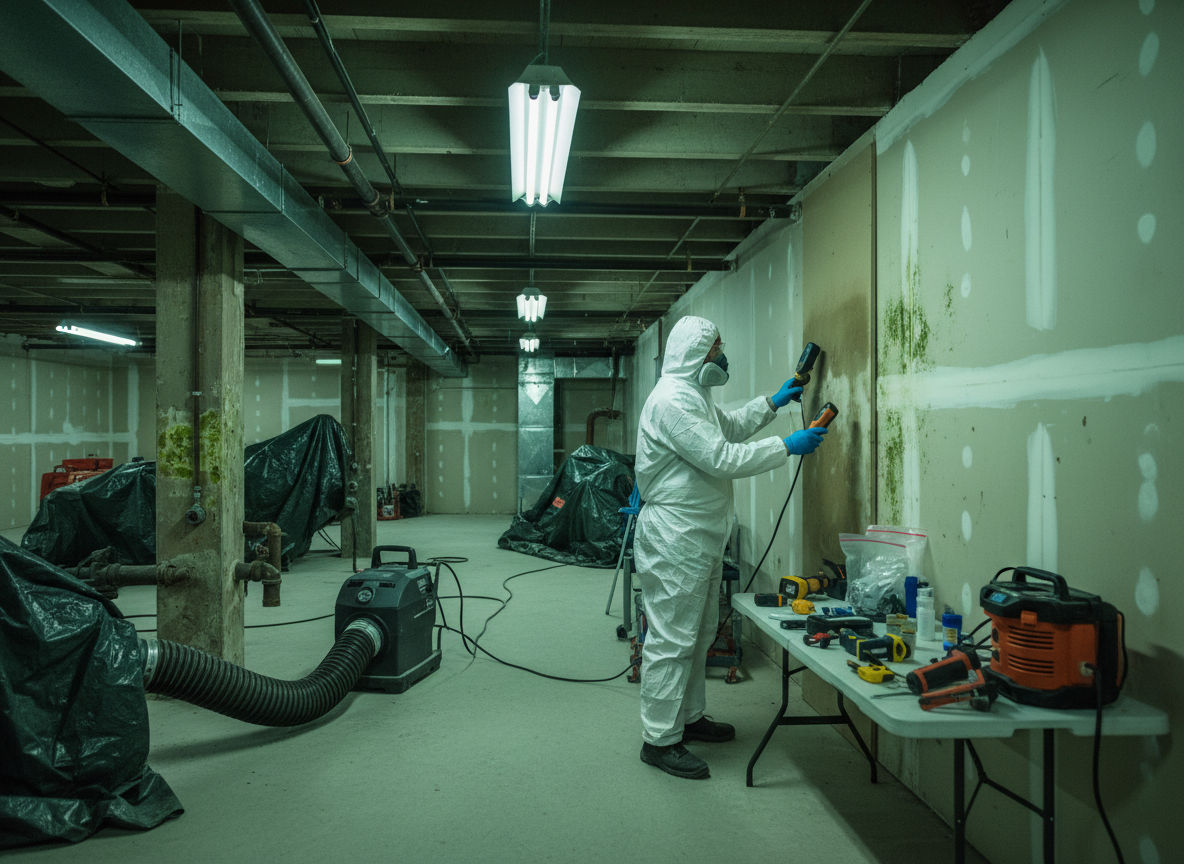
Whitewater sits in the Coachella Valley where summer temperatures regularly exceed 110 degrees, forcing commercial HVAC systems to run constantly. This creates condensation on coils, drip pans, and ductwork inside warehouses, strip malls, and office buildings along Dillon Road and toward Banning. Commercial mold inspection here focuses on rooftop units, return-air plenums, and wall cavities behind metal siding where temperature swings push moisture into insulation that rarely dries out on its own.
Many commercial structures in the area date from the 1970s through 1990s and use single-ply roofing or stucco that develops slow leaks around penetrations. Inspectors must check above suspended ceilings, inside electrical rooms, and along slab edges where groundwater from seasonal flash floods can wick upward. Access often requires lift equipment and coordination with property managers to avoid disrupting tenants in Palm Springs corridor businesses.
Because Whitewater experiences low annual rainfall yet sudden monsoon bursts, inspectors look for moisture trapped after even brief storms. Thermal imaging and moisture meters are used on CMU block walls and under vinyl flooring in retail spaces. Findings are documented with photos and mapped to HVAC zones so remediation crews know exactly which sections need isolation before any removal begins.
Technician insight
In Whitewater the thing that catches most people out with Commercial mold inspection is assuming desert heat prevents mold. Constant AC use on older rooftop units creates condensation inside ducts that never dries because the system rarely cycles off; we find growth in plenums above retail spaces along Dillon Road even when the roof itself is dry.
Strip Mall Unit Near Dillon Road
A retail tenant reported musty odors after monsoon rains. Inspection found elevated moisture in the return plenum of a 1980s rooftop unit where insulation had soaked from coil condensation. We isolated the section, documented the extent, and handed the property manager a targeted remediation plan that allowed the store to stay open during daytime hours.
How it works
- 1
Site Walk and Records Review
Walk every accessible commercial space, review past leak reports and HVAC service logs, and note building orientation relative to prevailing desert winds.
- 2
Moisture Mapping and Sampling
Use infrared cameras and pin meters to locate hidden moisture in walls, ceilings, and under floors; collect air and surface samples from suspect zones.
- 3
HVAC System Inspection
Open rooftop units and ductwork at access points to check coils, pans, and insulation for growth driven by constant cooling in extreme summer heat.
- 4
Report and Scope Delivery
Deliver written findings with photos, moisture readings, and a prioritized remediation scope that accounts for tenant schedules and 24/7 availability.
Pricing
Pricing depends on square footage, number of HVAC zones, and whether lift equipment or after-hours access is needed.